

SPOTLIGHT: Dawn Batts (MBA ’92)
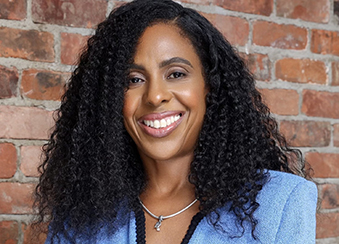
Dawn Batts (MBA ’92) has developed a career working alongside investors, founders, and ecosystem builders who are committed to expanding access to early-stage capital, particularly around the Detroit Metro area. A graduate of Michigan Ross, as well as MSU, with a PhD in Cultural Anthropology from Wayne State, she is all-Michigan in her education. Her career has unfolded through a series of pivots that gradually brought together finance, strategy, and community-centered work. We caught up with Dr. Batts during a hectic time this January.
For our readers, can you describe your work and what you’ve learned along the way?
My work centers on building pathways in the early-stage entrepreneurial ecosystem. I help people see themselves as [angel] investors and support founders in accessing the capital resources they need to grow.
Along the way, I’ve come to see that access to capital is about much more than money. It’s shaped by knowledge, confidence, relationships, and systems. Efforts to build investor communities served as meaningful learning labs for me, offering insight into how community, structure, and shared learning can demystify investing and open doors for emerging investors.
Describe your journey from school through your early career, your MBA, and beyond. How have your skills evolved through different pivots?
My career has unfolded through a series of pivots that gradually brought together finance, strategy, and community-centered work. I began with a strong financial foundation, which shaped how I think about risk, systems, and sustainability. Early in my career, I worked within a large organization, where I gained experience launching a new customer-facing service inside a complex environment that required coordination across operations, technology, and customer engagement.
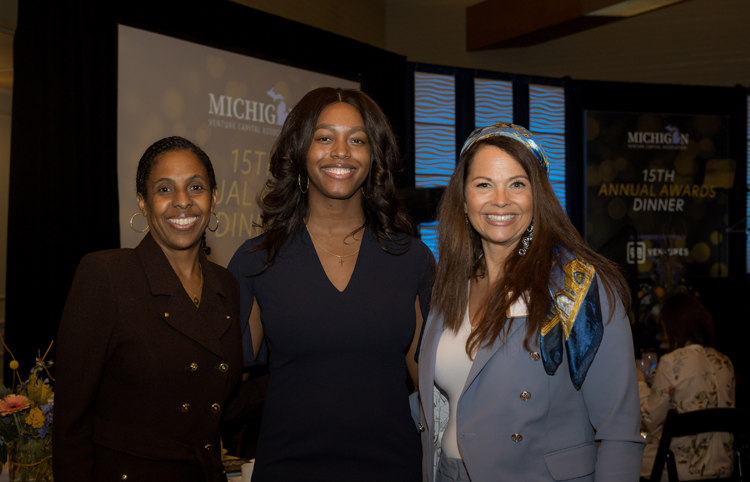
Dawn Batts (l), with Allison Murdock and Alicia Douglas at the Michigan Venture Capital Association Awards Dinner 2022.
Over time, I became increasingly drawn to work that connected financial rigor with mission-driven outcomes. I moved into consulting to help nonprofits and small businesses better understand their financials and program effectiveness, and later helped scale an investment management firm by building structure, processes, and growth strategy. These experiences strengthened my ability to translate ideas into execution and to support organizations through growth and change.
Alongside my professional work, I returned to school to study anthropology. That training deepened my understanding of how people make sense of their lives, how systems operate in practice, and who is included or excluded from opportunity. It added an important human and cultural lens to my analytical background.
That combination eventually led me into leadership roles, where I worked on programs designed to help founders and emerging investors better navigate early-stage capital and growth pathways. These roles laid the groundwork for the work I continue to do across investing, programming, and ecosystem building.
What are specific ways you see social impact happening through your work today?
I see social impact when people have clearer and more realistic pathways into opportunity. In practice, that often looks like investors gaining the knowledge and experience needed to participate responsibly in funding decisions, and founders being better positioned to secure early risk capital.
I currently spend much of my time on both local and national efforts focused on early-stage investing and entrepreneurship. My work includes investor education, program design, and capital deployment, along with ongoing engagement with investors, founders, and ecosystem partners to build and strengthen early-stage pathways for investors and founders.
Over time, I hope these efforts continue to contribute to broader community benefits. When investors are better prepared and founders are supported throughout their journey, the solutions that emerge are more durable, local economies are strengthened, and innovation remains closely connected to the needs it aims to serve.
What do you look for when evaluating early-stage ventures or founders?
When evaluating early-stage opportunities, I start with alignment and fundamentals. I look for scalable businesses and founders who understand the problems they are working to solve and are passionate about those problems. These founders tend to be resilient and grounded in customer insight, willing to test assumptions, and able to adapt as they learn.
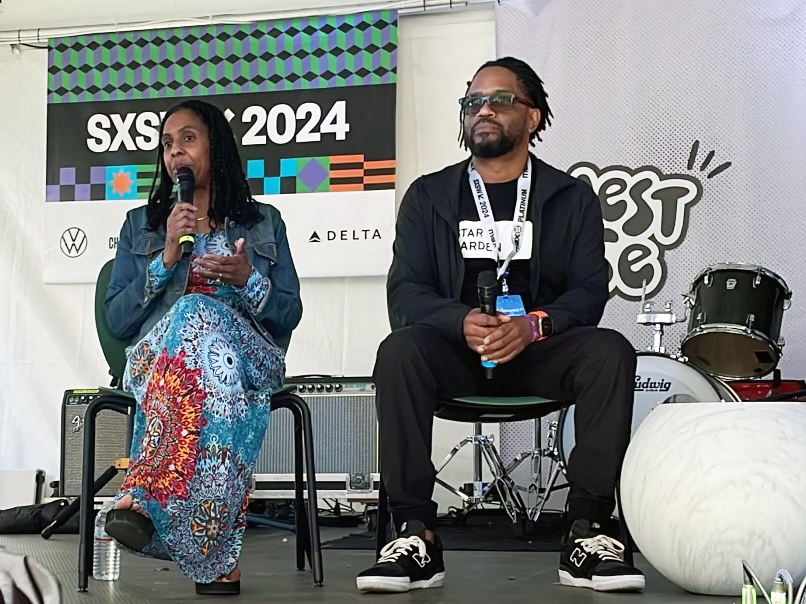
Dr. Batts speaking at SXSW, on the Midwest Stage
Early-stage companies are not only shaped by their founders, but also by the investors who support them. For that reason, I pay close attention to the investors involved and those we may seek to engage. Whether someone is new to angel investing or continuing to grow as an investor, I look for curiosity, patience, and a long-term perspective. When investors also contribute relevant skills, knowledge, and relationships, companies are better positioned to navigate uncertainty and build sustainable businesses.
Do you have any advice for current students aiming to make a career in the social sector?
There are a few patterns I’ve seen that tend to serve people well who want to make an impact.
One is not feeling pressure to have everything figured out early. Careers in impact often take shape through experience, and clarity usually comes from doing the work rather than meticulously planning it in advance.
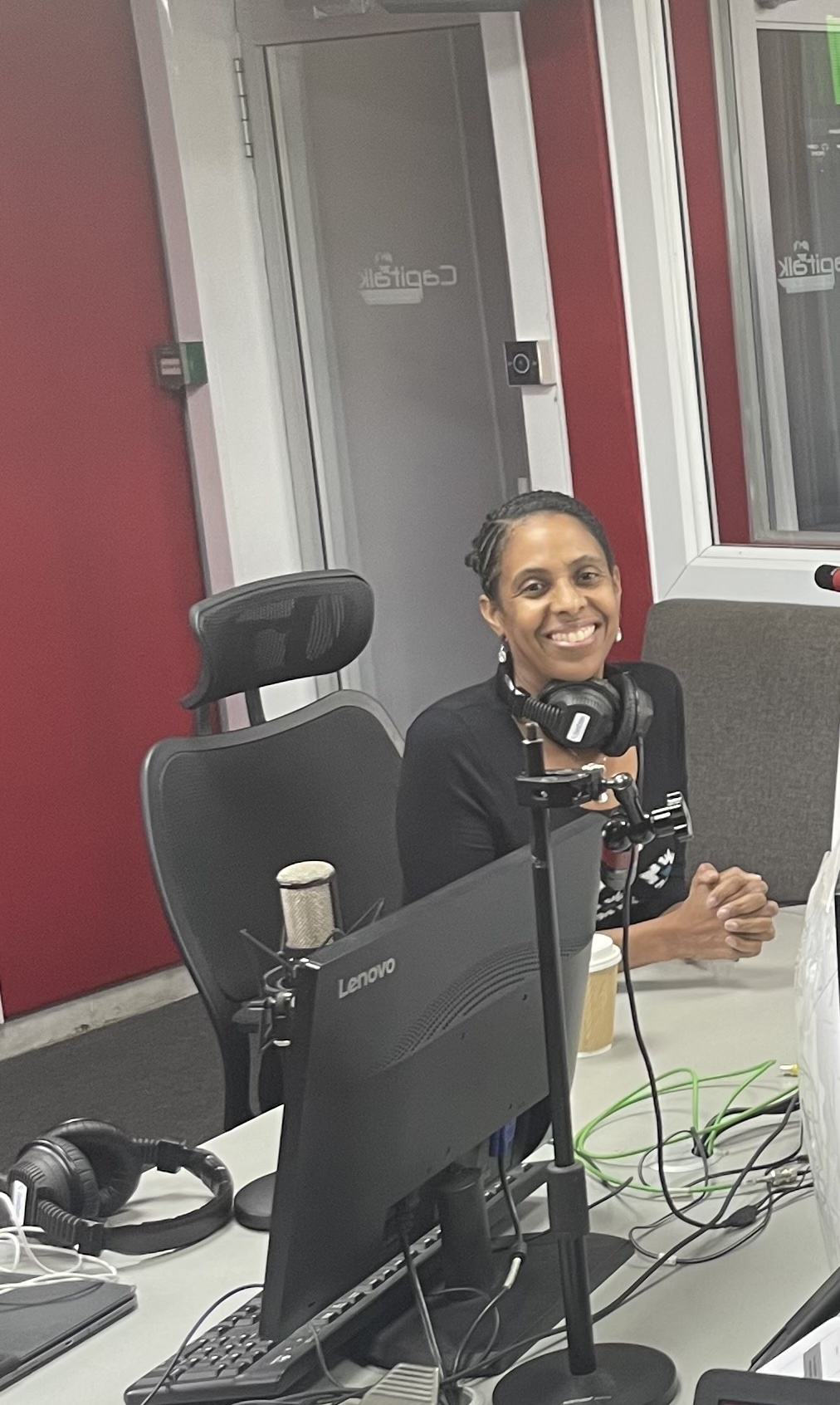
In Zimbabwe, taking part in a Capitalk Podcast
Another is building skills that translate across sectors, such as financial acumen, research, operations, or storytelling. Seek out experiences that place you close to the problems you care about, and take time to listen and learn before trying to offer solutions.
Finally, relationships matter. Invest in building authentic connections with generosity and intention. Many opportunities emerge from people who trust how you think, how you work, and how you show up.
What keeps you motivated when the work feels slow or challenging?
I stay motivated by remembering that meaningful change is cumulative; impact often comes from consistent, and sometimes invisible, work over time.
I also draw energy from community. Working alongside investors, founders, and ecosystem builders who are committed to expanding access to early-stage capital reminds me that progress is rarely the result of one person’s efforts. We move forward together, even when the steps feel small.