U-M Ross Business + Impact
Impact Roadmap

Search

Impact Courses You Won’t Want to Miss in Fall 2026

For a complete listing of all impact & sustainability courses, visit our Impact Roadmap.


Business


FOR UNDERGRADUATE STUDENTS

Base of the Pyramid: Business Innovation and Social Impact (BA 445)

Professor: Ted London  |  Credits: 3
Fall 2026

Section 1: Tuesday/Thursday (23 sessions) | 1-2:30 pm
Friday “Interactive Lab” sessions (Nov. 6 & Nov. 20) | 9:00am-noon

Section 2: Tuesday/Thursday (23 sessions) | 2:30-4 pm
Friday “Interactive Lab” sessions (Nov. 6 & Nov. 20) | 9:00am-noon

FOR GRADUATE STUDENTS

Business Strategies for the Base of the Pyramid (BA 612)

Professor: Ted London |  Credits: 2.25
Fall (B) 2026

Monday/Wednesday (11 sessions)| 12:40-2:10pm
Thursday “Interactive Lab” sessions (Nov. 5, Nov. 19 & Dec. 3) | 5:30-8:30pm

Ted London These courses focus on using the power of business to create a more inclusive world, with a particular emphasis on the base of the pyramid (BoP) — the four billion people who earn less than $3,000/year.

New business models in health, energy, housing, technology, agriculture and other impact areas offer the tantalizing promise of ‘doing well by doing good.’ Using a carefully crafted set of case studies, simulations, videos, and readings, we will apply these learnings to better understand successful BoP venture development by companies, social entrepreneurs, and non-profit organizations in Africa, Asia, and Latin America.  Weaving together concepts of strategic management, international business, cross-sector collaboration, and poverty alleviation, a key deliverable of the course is to provide students with the strategies, skills, tools, and processes necessary to develop and lead sustainable, scalable enterprises that deliver positive social impacts to the world’s most impoverished citizens.

For more information, please contact Prof. Ted London


FOR GRADUATE STUDENTS

LBLE – Living Business Leadership Experience (BA 656)

Professor: Mike Barger  |  Credits: 3
Fall 2026

FOR UNDERGRADUATE STUDENTS

LBLE – Living Business Leadership Experience (BA 456)

Professor: Mike Barger  |  Credits: 3
Fall 2026

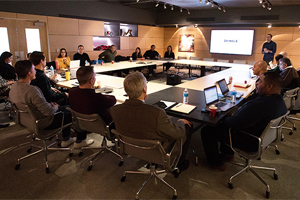
Living Business Leadership Experience boardroom Living Business Leadership Experience (LBLE) is a 3.0 credit-hour, full semester, Ross elective course where graduate and upper-level undergraduate students from across the University collaborate to shape, implement, and lead high-impact business initiatives alongside company founders and senior leaders of actual businesses. Whether you’re interested in learning business by doing business, working in a cross-functional team, or navigating complex and ambiguous business environments, this course will give you the chance to develop your leadership skills and dive headfirst into the challenges of real business.

Learn How to Enroll. To learn more about upcoming Fall 2025 enrollment, email [email protected].


FOR GRADUATE STUDENTS

Business in Society (STRAT 680)

Professor: Christie Barrett | Credits: 1.5
Fall 2026(A)

Christie BarrettThe world faces many large problems such as climate change, environmental degradation, global poverty, and inequality. This has led many people to argue that business should take the lead in Sustainability and addressing these problems.

At the same time, business is under increasing pressure from activist shareholders to maximize shareholder value. The primary goal of this course is to prepare you to deal with this challenge as a top executive in private or public organization by giving you an opportunity to explore competing views in depth and to work out your own position on them.


FOR UNDERGRADUATE STUDENTS

The Economics of Sustainability (BE 401)

Professor: Tom Lyon  |  Credits: 3
Fall 2026

FOR GRADUATE STUDENTS

Energy Markets and Energy Politics (BE 527)

Professor: Tom Lyon  |  Credits: 3
Fall 2026

FOR GRADUATE STUDENTS

Non-market Strategy: Shaping the Rules of the Game (BE 555)

Professor: Tom Lyon  |  Credits: 3
Fall 2026

Tom Lyon What, if anything, does it mean to say that a company is sustainable? The first course here will explore that body of knowledge, placing it within the larger context of environmental economics, and the economics of sustainability more broadly.

The goal of the second course is to give students a solid grasp of the environmental and social impacts of, and the institutions that govern, energy use, so that you can play a more effective role in shaping future policy or business decisions.

And the third course examines legal rules or public policies that favor or disadvantage particular businesses or industries. The focus is on how companies affected by social and political pressures can create or change the rules of the game.


FOR GRADUATE STUDENTS

Management as Calling (MO 635)

Professor: Andy Hoffman
Credits: 3 | Fall 2026

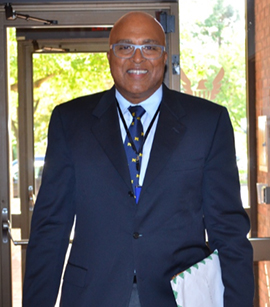
Andy HoffmanThis course is a series of immersive retreat experiences designed to help you look deep inside yourself to discern your calling, moving away from the simple pursuit of a career for private personal gain and towards a vocation that is based on a higher and more internally derived purpose about leading commerce and serving society.  The structure of this program includes two remote retreats for guided self-examination and discernment based on four components: (1) readings, (2) guided lectures and exercises, (3) peer mentoring and feedback, and (4) periods of self-reflection.  This course is capped at 40 slots and requires an application to be accepted. It is available to business students in their final year of study.

The application deadline for applications is Wednesday March 18, 2026 and they can be submitted through this webpage.


FOR GRADUATE STUDENTS

Reexamining Capitalism (MO 680)

Professor: Andy Hoffman
Credits: 1.5 | Fall 2026(B)

This course takes a close look at the institutions of capitalism, how it was conceived, how it has evolved, the multiple forms it takes around the world and the challenges our dominant shareholder model faces in the 21st century.

FOR UNDERGRADUATE STUDENTS

Innovation for Urban Impact (ENTR 419)

Professor: David Tarver
Credits: 3 | Fall 2026

Dave TarverToday, more than half the world’s people live in an urban community, a figure projected to reach 70% by 2050. In Innovation for Urban Impact, students learn what it takes to create or improve an urban-focused business to achieve lasting impact and financial success. In the course, student teams work with an actual, functioning urban-focused business. The student teams analyze the business model and marketing strategy and propose improvements that increase the businesses’ impact, sustainability, and scalability. The techniques learned in Innovation for Urban Impact apply to a wide range of business scenarios, including entrepreneurial startups, ongoing businesses, and consulting.

Sustainability


FOR GRADUATE STUDENTS

MO 564 (Cross Listed as EAS 512): Strategies for Sustainable Development I: Enterprise Integration

Professor: Andrew Hoffman |  Credits: 1.5
Fall 2026(A)

FOR GRADUATE STUDENTS

MO 565: Strategies for Sustainable Development II: Market Transformation

Professor:  Stu Hart |  Credits: 1.5
Fall 2026 (B)

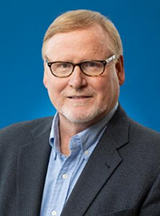
Andy HoffmanStuart HartThe first course (formerly STRAT564) examines ways in which sustainability can be translated into mainstream business strategy, linking it with issues like market demand, operational efficiency, cost of capital and more.  It is a course that leads into MO565.

The second course (formerly STRAT565) builds on MO 564 and examines why mainstream corporate sustainability efforts have failed to solve escalating environmental and social crises, and challenges students to rethink the role of business in driving systemic change. Students explore how companies can shift from incremental “greening” to transformational strategies that reshape markets and capitalism itself. Active participation, critical thinking, and reflection are central, as the course prepares future leaders to contribute meaningfully to the creation of a truly sustainable form of Capitalism.


FOR GRADUATE STUDENTS

UN Framework Convention on Climate Change (EAS 501.158)

Professor: Avik Basu | Credits: 2
Fall 2026

Avik Basu The United Nations Framework Convention on Climate Change (UNFCCC) is the primary vehicle for international negotiations addressing anthropogenic climate change. Once a year, the parties to the framework attend a meeting known as the Conference of the Parties (COP). The University of Michigan attained observer status in 2009, and students and faculty have attended, every year, as observer delegates. This course, provided in the Fall term, prepares student delegates and others interested in the UNFCCC. Outreach to the University community is required after the conference.

FOR GRADUATE STUDENTS

Energy Justice (EAS 525.001)

Professor: Tony Reames | Credits: 3
Fall 2026

Tony Reames Energy justice is one of the central global issues of our time, with profound implications for health and welfare, freedom and security, equity and due process, and technology development and implementation. This course explores the intersection of energy and equity issues related to a variety of domestic and global energy dynamics, to include ways for rectifying persistent unequal distributions of energy resources to ensure reliable, clean, and affordable energy access.

Policy


FOR GRADUATE & UNDERGRADUATE STUDENTS

Real-World Perspectives on Poverty Solutions
(SW 503-001)

Professor: Trevor Bechtel | Credits: 1
Fall 2026

Trevor BechtelHalfway between a course and seminars is the Poverty Solutions Speaker Series. Real World Perspectives on Poverty Solutions introduces key issues regarding the causes and consequences of poverty through an in-person lecture series featuring experts in policy and practice from across the nation. Our goal is to help build a broad community of learners to engage in these issues together. This series is free and open to the public. The events will be hosted Fridays at noon unless otherwise noted, in the School of Social Work ECC 1840 as well as live-streamed on YouTube. Speakers and subjects to be announced soon.

For a complete listing of all impact & sustainability courses, visit our Impact Roadmap.