

SPOTLIGHT: Shailesh Kumar (MBA ’01)
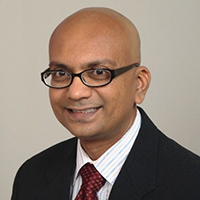
Shailesh Kumar (MBA ’01) works with leadership teams on complex strategy and operations challenges that directly impact revenue, margins, and operational performance. He began his career in management consulting at Kearney and has since held senior operating and finance leadership roles across manufacturing and advisory businesses. Shailesh serves on the Board of Directors of Washtenaw Literacy, a nonprofit providing free adult literacy, ESL, and GED tutoring across Washtenaw County.
What are specific ways that social impact has happened through your career or outside your regular job?
I started my first job after completing my Ross MBA in 2001 as a management consultant in Chicago. One of the first projects was pro-bono work for the City of Chicago. That was my first exposure to businesses driving social impact. Most of us give in our personal lives to the causes we believe in, but contributing time and resources as part of doing business is a powerful tool that is not well appreciated.
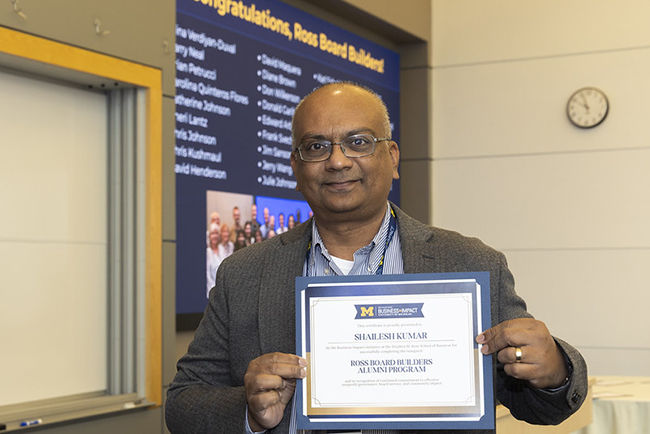
Shailesh Kumar holding up a certificate of completion at Ross Board Builders event.
Over the years I have supported organizations that work to help train young teens and adults in entrepreneurship through charitable giving. Four years ago, my wife Isabel and I co-founded an artisanal leather goods business with a goal of providing opportunities to the segment of our community that faces employment barriers for various reasons. Today I am on the board of Washtenaw Literacy, an organization that is singularly focused on promoting adult literacy throughout Washtenaw county. This helps many who have traditionally been out of the labor force get back on their feet by opening up new opportunities for them.
What skills or perspectives from your business career have proven most valuable in community-focused work?
Coming from a business background makes it clear that any social investment needs to show a return on investment. This can be in terms of improved earnings potential, new jobs, or even reduced mortality. Whatever the outcomes are, they can be translated into a monetary value that accrues to the society. There are some social investments and community projects that show benefits quicker. Empowering youth and adults and help them improve their marketability in the job market, or start and run a business has significant positive impact in the individual’s lives as well as the communities they are part of. The business background helps us look for a positive ROI of any investment in community-focused work and where these investments can be directed to maximize this ROI.
Which lessons or insights from our new Ross Alumni Board Builders Program best prepared you to pursue and accept a board role?
There are several I will point out.
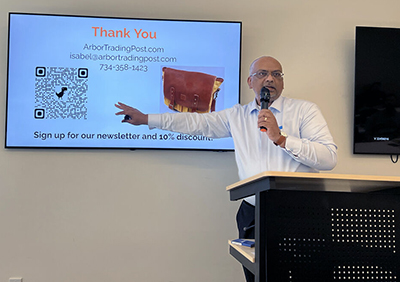
Kumar presenting on his leatherworking company, Arbor Trading Post, at 1 Million Cups Ann Arbor.
1. Understanding the nature of the responsibilities and type of oversight a board member has helped me crystallize that this is where I can have a significant impact.
2 We had several peers in the cohort that had or currently were serving on a nonprofit board. It was very instructive to hear about their experiences and how matters were handled on their boards.
3. It helped me shift my perspective by allowing me to look at the functioning of a nonprofit from a higher and more strategic level. The community building work is important, of course, but so is fund raising, planning for succession, and other high level issues that we normally do not think about.
You are involved with Washtenaw Literacy. Is there a particular project, priority, or aspect of their work that especially resonates with you?
I love the mission of promoting adult literacy. A lot of focus in our society is on educating kids, and supporting them through college and careers. In the process we do have many who for one reason or another fall out of this societal paradigm. Very little effort is put on educating adults. Washtenaw Literacy addresses this by meeting the learners where they are. This means conducting classes in prisons or community centers, teaching ESL to refugees, etc. As a community, we are only as strong as our weakest link, and Washtenaw Literacy works to strengthen these weak links.
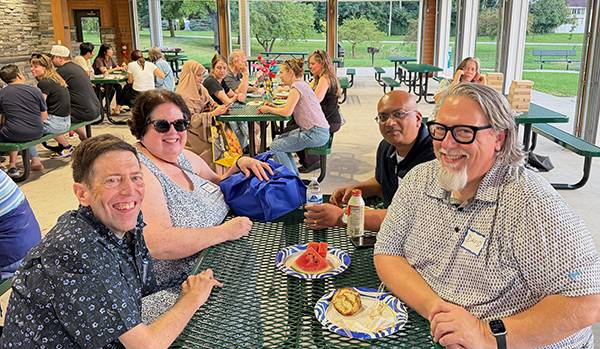
Shailesh Kumar with other board members, at their Washtenaw Literacy picnic.
How would you encourage other Ross alumni to use their skills in service of their communities?
Ross alums are spread out across the globe in a variety of industries and job functions. If every alum makes an effort to help improve their small corner of the planet, the world as a whole will be much better off. We all have the skills and means to contribute in the ways that suit us best. You can do so by contributing your time, your management acumen, or by finding organizations that are doing work that you believe in and helping them find funding. Even making the right introductions can go a long way towards helping these organizations do more impactful work.
Do you have any advice for current students aiming to make a career in the social sector?
There is no more noble work than to help others achieve their potential. I find that people exceed your expectations when they are given the opportunity to perform. Help them out. The world today needs as much help as we can give and we are in the best position to help. I believe that as artificial intelligence becomes more rooted in work and society, there are going to be large scale displacements in every aspect of business and life. The social sector will need you and your skills direly.
How do we find more information about you or get involved with Washtenaw Literacy?
You can always contact me through my firm, Arohan Advisor Partners. I help for-profit businesses and nonprofit organizations grow and improve their operations. If you are looking to support Washtenaw Literacy or wish to volunteer, you can do so at their website. No experience is needed, as you will be provided any training needed if you volunteer to tutor.