

2025-26 Board Fellows Experiences in the Field
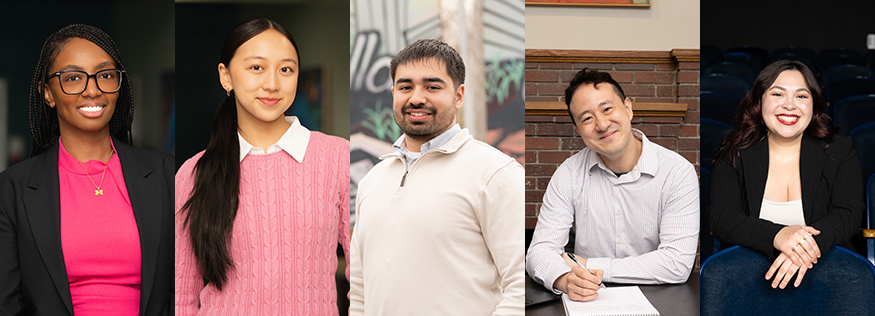
Brandy Blackwell, Whitney Zhang, John Paul Williams-Soriano, Edward Wang, and Isabella Martinez portraits.
Overview
During the 2025-26 academic year, participants in Business+Impact’s Golub Capital Board Fellowship Program have served as non-voting members of local nonprofit boards while completing impactful projects. This year’s cohort features 80 students affiliated with Michigan Ross, the Ford School of Public Policy, the School of Education, the School of Social Work, and the School for Environment and Sustainability.
See onsite photos of 2025-26 Board Fellows, You can also see the complete list of 2025-26 Board Fellows, however we interviewed just five of our Board Fellows here and learned a bit more about their personal experiences with the program:
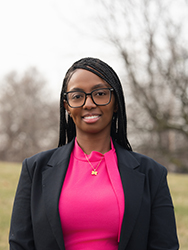
Organization: Alternatives for Girls
Location: Detroit, MI
Describe the project you have worked on with the organization, and how did it further the organization’s mission? I supported Alternatives for Girls (AFG) on a strategic initiative to enhance employee engagement and organizational culture. My role involved designing and deploying a comprehensive survey to capture insights into the employee experience. Following the data collection phase, I synthesized the findings for the AFG Board of Directors and HR Committee, highlighting key trends and actionable recommendations. This project helped to further the organization’s mission as it helps to support the great employees that work tirelessly to support girls and young women in Detroit.
What is the biggest thing you’ve learned from the Board Fellowship experience; what skill have you developed? One of my key takeaways from the board fellowship experience was the need to hone in on my strategic thinking skills.Being strategic within the non-profit sector means balancing immediate needs with long-term sustainability. I found the need to think more creatively to develop solutions that balance mission impact with financial and operational realities.
What have you learned from attending your nonprofit board meetings? Through this experience, I gained a deep appreciation for the intricate inner workings and robust governance required to maintain a non-profit’s health. Witnessing the diverse professional backgrounds and perspectives of my fellow board members was truly inspiring. I was particularly impressed by the collective commitment of the group, as everyone leaned in to provide the strategic vision and steady navigation necessary for AFG’s future
What impact will this experience have on your future plans? After completing the fellowship, I feel confident in my ability to be a strategic and resourceful board member for a non-profit organization. I plan to seek out opportunities to join the board of directors for organizations and communities that I’m passionate about. I understand the critical need for board service and look forward to giving back my time and talent.
Do you have advice for future Board Fellows? Be open to learn and take time to meet with board members outside of board meetings. Navigating complexity to gain clarity within non-profits is crucial and building relationships with the board and staff will help ensure your project is successful.
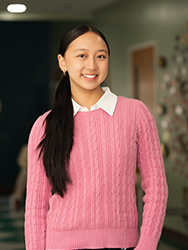
Organization: Alternatives for Girls
Location: Detroit, MI
Describe the project you have worked on with the organization, and how did it further the organization’s mission? The Role Model Celebration (RMC) is the largest annual fundraising event for Alternatives For Girls (AFG). It brings together the Southeast Michigan community and serves as a critical opportunity for the organization to secure unrestricted funding while building meaningful connections with local supporters. My project focused on organizing the event’s complex planning processes into a comprehensive digital handbook that the organization can use for years to come. The handbook clearly defines roles and responsibilities, many of which previously lacked structure, and outlines key workflows and timelines to support seamless execution. By creating this resource, AFG is better equipped to run the event efficiently and maximize its fundraising impact, ultimately sustaining and expanding its services. The handbook also establishes consistent protocols that support long-term relationship building with community partners and sponsors.
What is the biggest thing you’ve learned from the Board Fellowship experience; what skill have you developed? One of my main takeaways from the Board Fellowship experience is the importance of strategic planning and decision making, especially during a challenging era for the nonprofit sector. I had the privilege to join AFG’s strategic planning session where we brainstormed and discussed strategic goals for the organization for the next three years. It was insightful to witness the board juggle competing priorities like refining core values, balancing expansion with potential reduction of services, and ensuring financial sustainability. This experience reinforced how critical it is for organizations to clearly define their direction and the steps needed to move forward. As a result, I have added many different frameworks and mental models to my collection, developing my ability to apply these tools to complex, real-world decisions.
What have you learned from attending your nonprofit’s board meetings? Attending board meetings has been incredibly inspiring. Each board member brings a unique background and perspective, yet they are united by a fierce commitment to AFG’s mission. I’ve seen firsthand how powerful it is to have diverse voices at the table, but even more important is having a collective sense of purpose that channels that diversity into meaningful action. This alignment between passion and expertise is what enables the board to effectively guide and support the organization.
What impact will this experience have on your future plans? I (somewhat) knew going into the fellowship that I wanted to pursue a career in mission-work and this experience has only strengthened that desire. It has also shown me that “giving back” doesn’t have to be a career choice but a lifelong practice. Regardless of where my career takes me, I hope to stay involved by serving on nonprofit boards or maintaining a “boots on the ground” connection to my community through volunteering.
Do you have advice for future board fellows? My advice is simple: ask every question that pops up in your head! There is no such thing as a “silly” question, especially when you are the new person in the room. In fact, your status as a newcomer is your greatest asset; asking seemingly basic questions often pushes a board to re-examine their long-held assumptions and encourage clearer communication around decisions and processes. It can feel intimidating to speak up at first, but your curiosity is a service to the organization. Take pride in it.
Acknowledgements: A sincere thank you to the AFG staff and leadership, the board members, especially my board mentor, Janet Pinkerton, and my co-fellow, Brandy Blackwell, for such a meaningful experience. This has been a main highlight of my graduate school experience and I am deeply grateful to Business+Impact for the last 8 months.
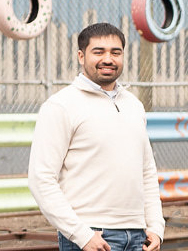
John Paul Williams-Soriano, PhD
Organization: Cadillac Urban Gardens
Location: Detroit, MI
Describe the project you have worked on with the organization, and how did it further the organization’s mission? I worked with Cadillac Urban Gardens (CUG) to establish development infrastructure to expand their individual giving programs. This work directly supports CUG’s mission to grow and distribute produce while providing place-based learning opportunities for the Southwest Detroit community. This project allowed me to evaluate development operations at CUG, draft gift acceptance policies, and provide stewardship strategies for current CUG donor segments.
What is the biggest thing you’ve learned from the Board Fellowship experience; what skill have you developed? During my board fellow experience, I learned the necessity of collaboration and communication in enacting a nonprofit’s mission. CUG does a great job of maintaining collaborative relationships with other organizations and community partners to support their mission and individual programs. I think these skills contribute to the success of CUG as an organization and enhances their impact alongside their partners in Southwest Detroit and Southeast Michigan more broadly.
What have you learned from attending your nonprofit’s board meetings? By attending the CUG board meetings, I have learned the importance of expressing patience and gathering information prior to making decisions. CUG board meetings are well organized and highly efficient. Additionally, the CUG board asks many questions and sometimes delays certain votes to ensure they have the information necessary to reach an informed conclusion. The actions taken by a board can have lasting impacts on the operations and health of an organization, and I admire the CUG board for their measured decision-making.
What impact will this experience have on your future plans? My experience serving as a Board Fellow with Cadillac Urban Gardens has reinforced my commitment to social impact work and supporting organizations whose missions align with my own values. Additionally, my Board Fellow experience was my first real exposure to the career paths that exist within the nonprofit and philanthropy sectors. This exposure solidified my plan to seek out board service and other professional opportunities in the nonprofit space after graduation.
Do you have advice for future board fellows? I would encourage future board fellows to embrace their own curiosity and humility when serving on the board of a new organization. You have the unique learning opportunity to jump in the middle of an organization that has individually selected you for your perspective and expertise. Take advantage of this! Don’t be afraid to ask questions and expand your understanding of how an organization operates or faces challenges.
Do you have anything else you would like to add? I would like to personally thank Cadillac Urban Gardens for allowing me to serve as a Board Fellow, especially my mentors Alondra Carter-Alvizo and Sarah Clark. The CUG Board of Directors and staff maintain an impressive level of focused dedication to the CUG mission and the Southwest Detroit community. I am grateful to have had the opportunity to learn from CUG and support Southwest Detroit as a board fellow.
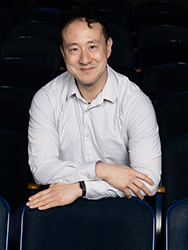
Organization: Riverside Arts Center
Location: Ypsilanti, MI
Describe the project you have worked on with the organization, and how did it further the organization’s mission? During my Board Fellowship, I worked with the Riverside Arts Center (RAC) to research partnership prospects and develop a stronger contact pipeline for the Holiday Art Fair and other fundraising efforts. By identifying organizations and potential points of connection, I helped RAC broaden its network of supporters and approach fundraising more strategically. As a key part of Ypsilanti’s arts ecosystem, RAC depends on this support to sustain its mission and continue serving artists and creatives.
What is the biggest thing you’ve learned from the Board Fellowship experience; what skill have you developed? Working with RAC helped me see how important it is to turn a broad sponsorship goal into a concrete process, from identifying prospects to shaping outreach that fits the organization’s values and needs. Through that work, I developed skills in donor and partner prospecting, strategic communication, and translating high-level fundraising goals into actionable steps. It also strengthened my ability to think more systematically about how small nonprofits can build sustainable external support.
What have you learned from attending your nonprofit’s board meetings? Attending RAC’s board meetings helped me better understand how financial decisions shape every part of a nonprofit’s work, from programming ambitions to staffing capacity to fundraising priorities. I had worked in nonprofits before, but this was the first time I was able to see those questions from a board-level perspective, where the focus is on sustaining the organization as a whole.
What impact will this experience have on your future plans? My Board Fellowship has made me more aware of how easily community perspectives can be overlooked in large institutions. Going forward, I want to help build organizations that are responsive to the communities they affect and capable of creating the conditions for those communities to thrive.
Do you have advice for future board fellows? My advice to future Board Fellows is not to be afraid to ask questions, especially about topics like finance, governance, or board dynamics that may feel unfamiliar at first. Everyone is still learning, and asking thoughtful questions is one of the best ways to contribute and grow. I would also encourage fellows to approach nonprofit work with seriousness and respect: it is not just an avocation or a passion project but demanding professional work. That mindset will help you get more out of the experience and better appreciate the organizations you are serving.
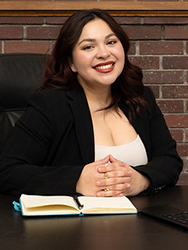
Organization: Riverside Arts Center
Location: Ypsilanti, MI
Describe the project you have worked on with the organization, and how did it further the organization’s mission? During my Board Fellowship, I developed a sponsorship package for the Riverside Art Center (RAC), with the support of staff. The project focused on creating materials to engage potential sponsors and communicate the organization’s mission, vision, and values. As RAC serves as an important creative space for local artists and residents, increasing sponsorship would sustain arts programming, expand access, and ensure Riverside can continue to serve the Ypsilanti community.
What is the biggest thing you’ve learned from the Board Fellowship experience; what skill have you developed? One of the insights I gained from the Board Fellowship experience is the importance of board governance and collaboration in shaping the organization’s impact. Prior to the Fellowship, I mainly viewed nonprofits through the lens of the services they offered to residents, but now I see how critical board members are in setting direction, establishing accountability mechanisms, and working with staff to ensure alignment on their mission. The Board Fellowship experience allowed me to think strategically about communications. Having worked on a project where you translate impact into a language that resonates with potential funders and stakeholders shifted my perspective and led me to further appreciate the work of nonprofit board members and staff in their daily operations.
What have you learned from attending your nonprofit’s board meetings? Attending board meetings taught me how much thought and collaboration go into nonprofit governance. Through monthly engagements, I saw how board members balance big-picture strategy with practical concerns such as budgeting, programming, and long-term sustainability. Board meetings are not just about decisions, but about taking into consideration your community’s needs. Having sat in on several meetings allowed me to gain a better understanding of how each member’s experience and insight can shape the direction of a nonprofit organization.
What impact will this experience have on your future plans? My experience at RAC has deepened my interest in pursuing a career in public service, particularly in community engagement. As a Mexicana who has never previously been in this type of space, I became acutely aware of the need for representation of people of color in nonprofit board leadership. I hope to remain actively involved with nonprofits, whether as a future board member or working alongside them, to ensure they provide culturally competent programs and services in their communities.
Do you have advice for future board fellows? My advice for future Board Fellows is to stay curious, take initiative, and draw from your lived experiences. Board service is a valuable opportunity to learn not only about the mission, but also about the work and people that keep the organization running. Be open to asking questions and look for ways your skills can support the organization’s needs. Ultimately, you should treat your project as a meaningful contribution that can create a lasting impact on the organization.