

Nonprofit Partner Profile: Playworks Michigan
Two boys race across the playground during recess, both reaching for a lone basketball at the same time. Instead of arguing, they face each other, count to three and flash their hands: rock, paper, scissors. Rock beats scissors. One boy scoops up the ball; the other accepts the result without protest.
Scenes like this show how building play into the school day can help educators manage behavior problems that can compete for their time. The nonprofit organization Playworks Michigan trains schools to use conflict-resolution tools rooted in games and structured play. Teachers and administrators say a quick round of rock, paper, scissors can often settle disputes before they escalate.
“Play really is the way kids develop and become more creative,” said Judy Tipton, executive director of Playworks Michigan. “It helps them learn teamwork, problem-solving, how to interact, and even how to disagree.”
Opportunities for that kind of play have shrunk, she said, under growing pressure to raise test scores. “We’re trying to bring the importance of play back to everyday life,” Tipton said.
The nonprofit trains school staff, places full-time recess coaches in schools, partners with community organizations like local YMCAs, and offers online lessons. “Anywhere kids gather, we want play-based practices helping them develop socially, which improves life at school, work, and in their community,” Tipton said.
How Playworks Began
Playworks started in 1995 when Jill Vialet, then running an art program in Oakland, California, was approached by a frustrated principal. Behavioral problems during recess were consuming her afternoons. “Is there anything you can do to help me with recess instead?” the principal asked.
That question led Vialet to found an organization focused on building social and emotional skills through play. Today, Playworks operates 23 chapters nationwide.
The Michigan chapter, launched in 2010, has grown into a $1.6 million organization that reaches thousands of students in low-income schools each year. During the 2024-25 school year, it trained more than 400 staff members, serving more than 8,200 students. The organization is expanding beyond elementary schools to early childhood centers and community violence intervention programs, emphasizing teamwork, problem-solving, and safe conflict resolution through play.
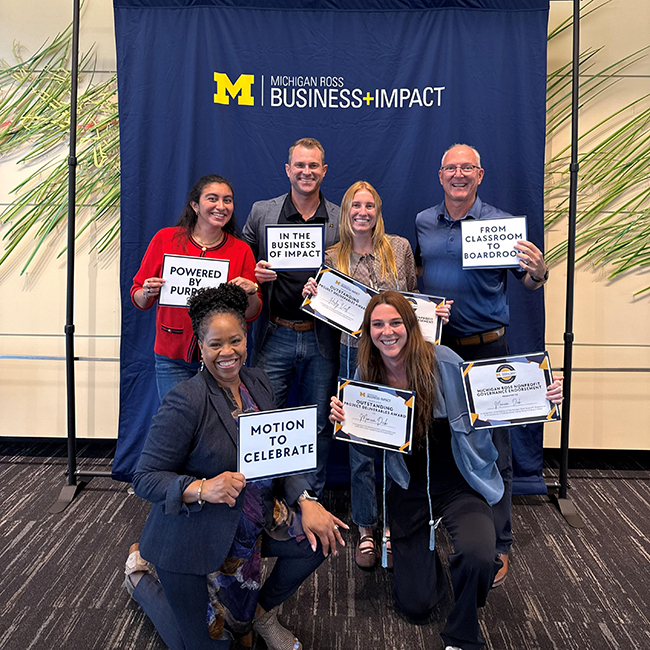
From top left, clockwise: Jasmin Lopez, Reed Harris II, Haley Viall, Mike Schulte, Monica Dick, and Judy Tipton.
A Partnership with University of Michigan
As Playworks Michigan grew, the organization partnered with the University of Michigan Ross School of Business through the Golub Capital Nonprofit Board Fellows Program. Graduate students join regional nonprofit boards as non-voting members to complete projects in governance, assessment, or strategy.
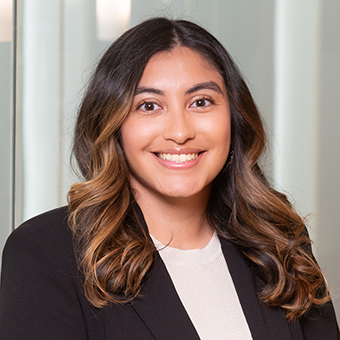
Jasmin Lopez, MBA ’26
Jasmin Lopez, MBA ’26 said the Board Fellows program was one of the reasons she chose to pursue an MBA at the University of Michigan. Based on her experiences growing up, she had long hoped to serve on the board of an educational nonprofit but assumed she would have to wait until she was much further along in her career.
Her mother, a single parent and immigrant from Guatemala, relied on local nonprofits for help settling in the United States, and Lopez later received a full scholarship to attend a boarding school through a nonprofit program that helped set her path to college. “My mother instilled in me the spirit of giving back to those who gave a lot to us,” Lopez said.
Lopez’s project for Playworks Michigan focused on creating strategies to attract younger donors. Board Member Reed Harris II said Lopez’s work “helped us better reach younger generations of potential donors by making sure we’re communicating with them on our social channels so they’re aware of Playworks and understand the organization.”
Lopez recommended switching to a fundraising platform that would retain donor information from year to year, allowing the nonprofit to build longer-term relationships. She also developed digital fundraising campaigns tied to the Super Bowl and March Madness to appeal to younger supporters who often give smaller amounts.
“My biggest area of growth was learning how to get buy-in from different people who have different interests and different goals,” said Lopez, who served on the fundraising subcommittee. “I also became confident in sharing my ideas and speaking up, which can be a little intimidating among people who have more professional experience and are members of different boards.”
As her fellowship ended, Lopez asked Tipton if she could continue working with Playworks. The board invited her to join as a voting member during her second year at Ross.
“When I delivered my recommendations, I realized that I wanted to be a part of executing them,” Lopez said. “I wanted to continue being an advocate for the nonprofit, getting out in the community, attending their events, and volunteering.” Lopez is now also serving as a Weiss Senior Fellow at Ross, mentoring current Board Fellows as they work with nonprofit boards.

Monica Dick, MBA ’27
Playworks’ next Board Fellow, Monica Dick, MBA ’27, focused on brand experience development, first helping create internal advocacy for board members to craft individual fundraising appeals for the nonprofit’s 30th anniversary. Dick, who has professional marketing experience, led board members by example and made it easy for them to get involved by providing a guide to set up fundraising pages and suggested social media language.
“Those were tactics that helped our board reach out to more donors and better engage them socially,” Harris said. “That led to a 50 percent increase in our individual fundraising efforts as a board from the previous year.”
Dick then turned her attention to strengthening the nonprofit’s marketing messages to reach school districts, corporate sponsors, and community organizations. With feedback from Harris and Tipton, she created short pitch decks tailored to different audiences.
“We collect lots of data, and we have lots of stories, but it’s been a challenge for us as a region to take all that information, put it in a digestible format and make it a complete picture that inspires our different audiences,” Tipton said. “We’re excited to have Board Fellows helping us to embrace that next step.”
Dick said the fellowship changed how she thinks about impact in the nonprofit sector. “From my board experience, understanding how a clear mission is driven by people and results — not just financial outcomes — has been powerful coming from the for-profit health care sector,” she said. “At the end of the day, health care only matters if we impact the patients who need it most. Seeing how an organization works toward that — helping kids prioritize play and improving focus in school and support for staff — has been powerful.”
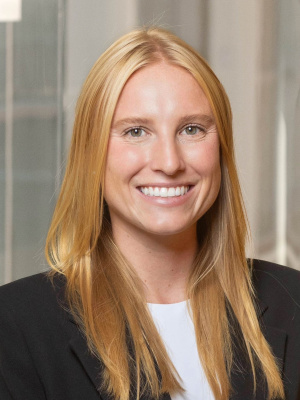
Haley Viall, MBA ’27
Building on the efforts of other Board Fellows to strengthen Playworks Michigan, Haley Viall, MBA ’27 MBA, is working to secure corporate sponsorships to help more school districts access its programs. She said the experience has taught her how to be creative in designing her own projects and mapping out the steps to complete them. “That’s a big growth area, because every time you take that on, it’s like starting a new learning curve,” she said.
Viall, a former consultant, said participating in board meetings has given her a firsthand view of how a nonprofit operates — from governance and strategic goals to the ways donations fuel its work. “It also gave me the opportunity to interact with board members from different backgrounds and see how that plays into their perspectives,” she said. “Someone with a finance background would ask how a certain idea would impact costs, and someone with a teaching background would ask, “Have you talked to the principal about this concept?’ That makes for such a strong board when they have a diverse mix of professions.”
Viall also appreciated experiencing a nonprofit in a more strategic, hands-on way than typical volunteering and said it sparked her interest in serving on a nonprofit board someday.
Value of Board Fellows
“Board Fellows infuse us with energy, ideas, and strategies we hadn’t considered,” Tipton said, while also fostering full board engagement and accountability.
Harris added that the Fellows are always ready to jump in, take something on, and see it through to execution.
“That’s what drives effective, impactful change,” he said. “The Board Fellows bring not only strategic insight from their education and prior experience, but they’re doers — and boards need more doers.”